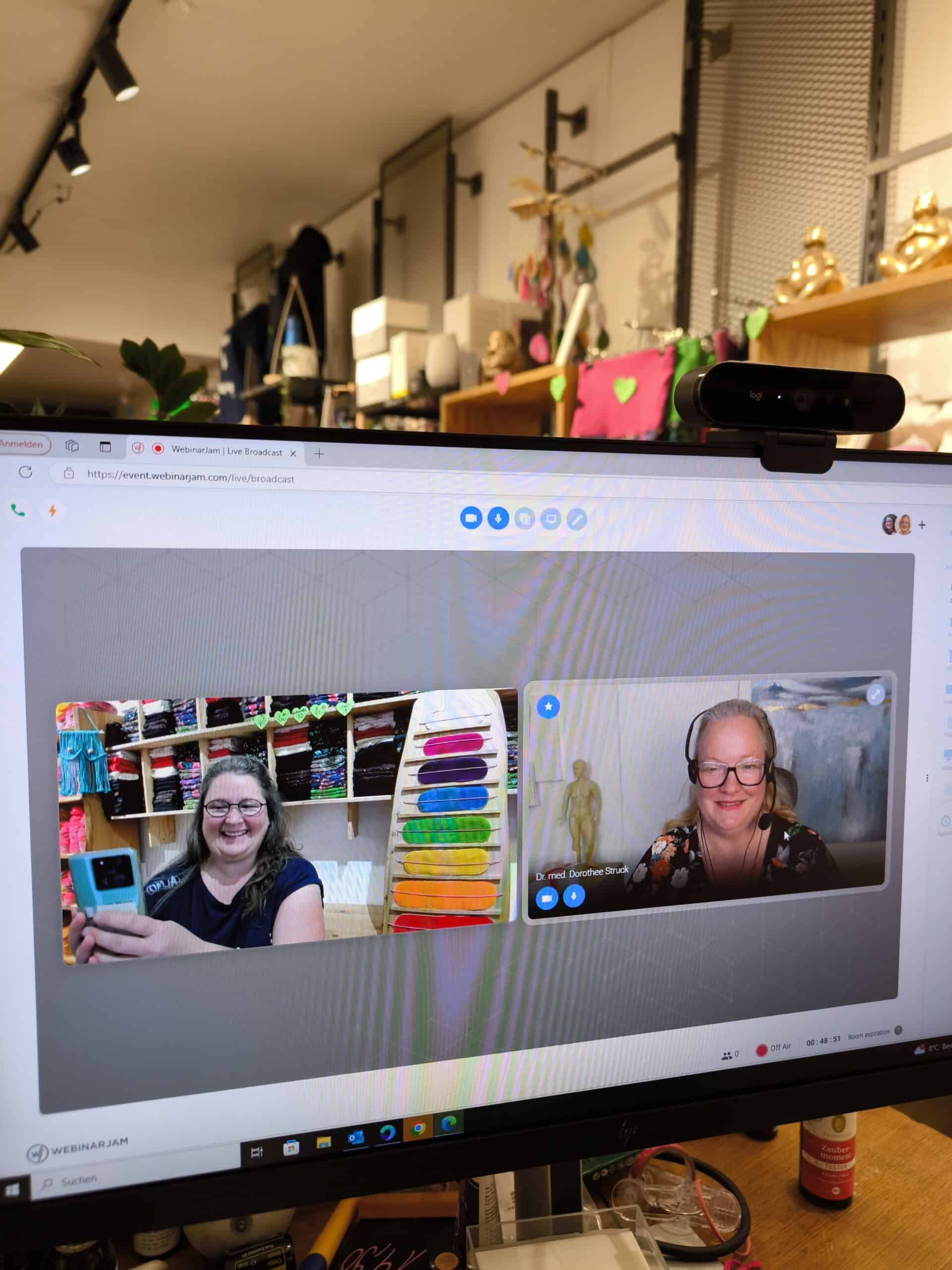
Menstruationsbeschwerden gehören für viele Frauen zum Alltag – aber was, wenn das nicht sein muss? Ich durfte als Special Guest an einem unglaublichen Vortrag von Dr. Dorothee Struck teilnehmen. Sie ist Gynäkologin, Naturheilkundlerin und Hypnosetherapeutin – und sie hat eine Mission: Frauen zu helfen, ihre Menstruationsschmerzen nachhaltig zu lindern.
In ihrem Kurs geht es nicht darum, einfach nur Schmerzmittel zu nehmen. Sie zeigt natürliche und medizinische Wege auf, um die Periode sanfter und schmerzfreier zu erleben. Und das Beste: Die Aufzeichnung des Kurses ist jetzt verfügbar!
Jeden Monat das gleiche Spiel: Regelschmerzen, Krämpfe, Erschöpfung. Viele greifen direkt zu Schmerzmitteln – aber gibt es vielleicht Alternativen?
Dr. Struck hat in ihrem Vortrag verschiedene Methoden vorgestellt, um Menstruationsschmerzen natürlich zu lindern:
✅ Schulmedizinische Lösungen – Welche Medikamente wirklich helfen, ohne den Körper zu belasten.
✅ Naturheilkundliche Alternativen – Heilpflanzen, Tees und Nährstoffe, die Zyklusbeschwerden reduzieren können.
✅ Hypnose gegen Regelschmerzen – Wie dein Unterbewusstsein dabei hilft, entspannter durch die Periode zu kommen.

Ich war skeptisch – aber die kurze Hypnose-Übung im Vortrag war ein echter Aha-Moment. Denn unsere Gedanken beeinflussen, wie wir Schmerzen wahrnehmen. Wenn wir die Periode entspannter annehmen, kann sich auch das Schmerzempfinden verändern.
Durch gezielte Hypnosetechniken kannst du lernen, deinen Körper auf eine sanfte Menstruation einzustellen – ohne direkt zu Schmerzmitteln greifen zu müssen. Ein echter Gamechanger!
Warum jede Frau diesen Kurs kennen sollte
Was mich besonders begeistert hat: Es gibt nicht die eine Lösung – es gibt DEINE Lösung!
⭐ Individuelle Ansätze statt Einheitslösungen
⭐ Kombination aus Schulmedizin & Naturheilkunde
⭐ Nachhaltige Hilfe statt kurzfristiger Schmerzbekämpfung
Das Beste? Falls du den Vortrag verpasst hast – die Aufzeichnung ist jetzt erhältlich!
Ich hätte mir dieses Wissen schon viel früher gewünscht. Denn wenn es Wege gibt, Menstruationsschmerzen zu lindern – ohne jedes Mal Schmerztabletten zu nehmen, dann sollten wir sie kennen!
Hast du schon Erfahrungen mit natürlichen Methoden gemacht? Schreib mir in die Kommentare!
Mit den Code "ALMO" bekommst du mit 20,-€ RABATT auf den Kurs. Hier gehts direkt zur Frauenklasse.
Und für den Kurs gilt der Rabatt-Code auch: Medizinische Hypnose gegen Menstruations-Beschwerden
Kuschlige TAGE
Stefanie von ALMO

Stefanie Wagner ist die Gründerin von ALMO (Alternative Monatshygiene) und begeisterte Trägerin ihrer eigenen Stoffbinden, Slipeinlagen und Periodenslips. Diese werden aus Bio-Baumwolle hergestellt und in Deutschland genährt. Stefanies Motto lautet: "Etwas anderes kommt mir nicht in die Hose!" Seit 11 Jahren spricht sie offen über das Tabuthema Menstruation und nimmt dabei keine Binde vor den Mund. In Ansbach eröffnete sie 2019 den ersten Menstruationsladen Deutschlands.
Cloth sanitary napkins are on the rise, because more and more women are looking for alternative monthly hygiene and products that are sustainable and protect the environment and their wallets equally. Moreover, the purchase of such monthly products is firmly linked to certain shopping habits in our mind. So it makes perfect sense to buy sanitary towels, tampons and other menstrual hygiene items in a drugstore. But so far there are no cloth sanitary towels there. However, that does not have to mean that it will stay that way.
Because drugstores, like the German "DM" in particular, are mostly known for making a lot of progress in terms of sustainability about their offered products as they are listening to their community on the Internet. So it can be quite useful not only to inquire by the local market but also to activate other women and to bring up the topic on Facebook or Instagram. Because the thing is actually quite simple: if there is a demand, one or the other drugstore will consider whether the product range should not be expanded to include cloth sanitary towels.

Washable sanitary towels
Washable sanitary towels used perfectly normal, but now you have to look for them like a needle in a haystack. An alternative to the drugstore shelf are selling points like unpackaged shops, of which there are more and more, organic shops but also practices of gynecologists, alternative practitioners and midwives or also shops which offer cloth diapers. You can find an ever-expanding list of providers that carry washable sanitary towels or cloth sanitary towels from ALMO here. There you will also find many events where you can learn more about alternative menstrual hygiene and cloth sanitary towels. Fabric sanitary towels you can touch, so to speak, because many women have prejudices and can not really imagine how a fabric sanitary napkin works in everyday life, how it can be stored in a used condition and much more.
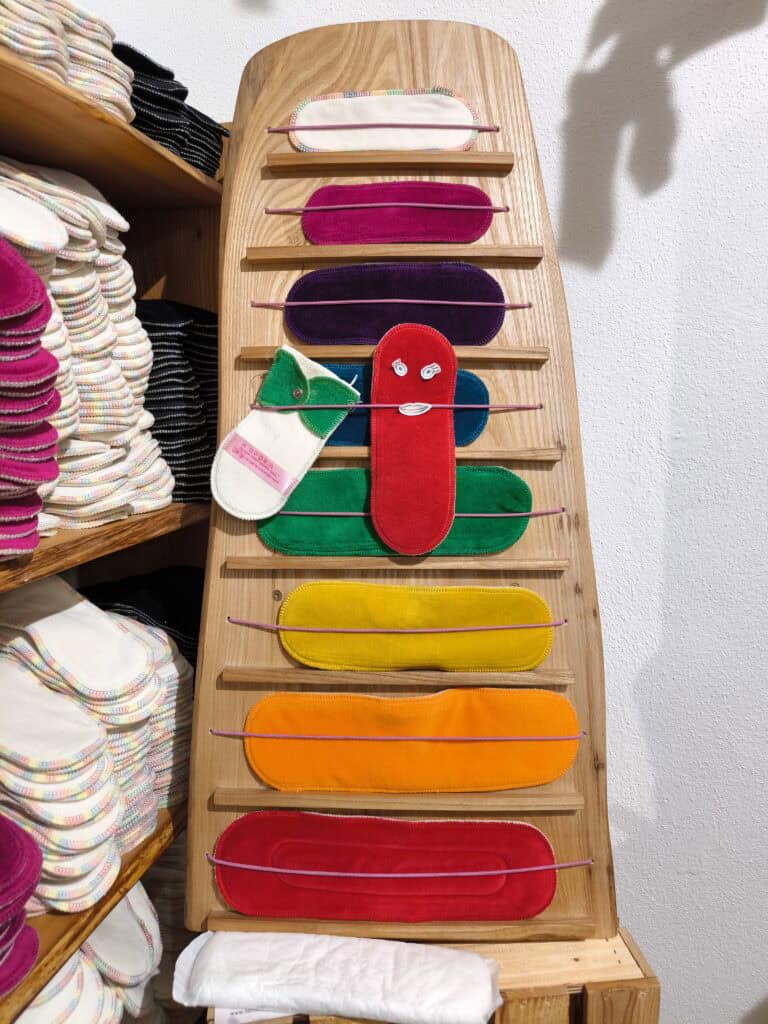
It will probably take some time before there will be washable sanitary napkins in the range of drugstores. However, since fabric sanitary napkins have a long lifespan and it is not necessary to buy fabric sanitary towels at the drugstore every month, as you have been used to, there is nothing to prevent you from ordering them online. In the ALMO shop you get fabric sanitary towels that have been tried and tested and will exceed your expectations. As you are used to from conventional sanitary towels, the fabric sanitary towels have an absorbent core and wings that you can use to attach them to your panties. The wings are simply wrapped around your panties and buttoned at the bottom.
What will surprise you is the cozy feeling in the pants, because a plastic bandage can not achieve that.
Every single form of monthly hygiene has its advantages and disadvantages, depending on whether the safest possible leakage protection, sustainability and environmental compatibility, costs or the simplest possible handling with pleasant wearing comfort are in the foreground. No product fulfills all the points 100%, but alternative monthly hygiene products take the lead, especially because of their sustainability and cost savings.
Disposable pads & tampons
They are the classics on the drugstore shelf and are therefore the standard products that women have to deal with particurarly frequently during their menstrual cycles.
Leak protection & hygiene:
Sanitary towels are usually available with and without wings, sometimes in longer, narrower or tailored versions. They should be changed regularly, on heavy to normal days at least 5-6 times in 24 hours. Tampons should be changed at least every six hours (TSS syndrome).
Sustainability & environmental protection:
Conventional disposable sanitary towels and tampons are usually packaged in plastic and also contain plastic (phthalates, also known as softeners). Superabsorbents and gel cores ensure that as much menstrual blood as possible is absorbed and that the wearer feels pleasantly dry. The natural components such as cotton are partially bleached, which creates dioxins. In addition, artificial fragrances are added to convey a special feeling of freshness.
There is currently no legal obligation to label these additives and their components. The decomposition of the disposable sanitary napkins and also the tampons needs several centuries in the case of conventional products. After all, organic products decompose in shorter periods of time.
Health:
Cotton is used in both sanitary towels and tampons and, like many other products for daily consumption, is treated with pesticides, especially glyphosate. It should be clear to everyone that this is not good for the sensitive mucous membranes of the vagina in the long term. But in the case of tampons, for example, whether treated or untreated does not matter. These are mainly bought according to one criterion: they should be absorbent. This in turn can let the mucous membrane drying out. The result is frequent fungal infections. Anyone who frequently suffers from itching, burning and discharge in the intimate area should consistently wear cotton underwear for 2-3 months, avoid plastic tampons and sanitary towels and, above all, avoid fragrances in them - this also applies to the washing detergent.
Purchase & costs:
The standard range is now available in every supermarket, gas station, kiosk, sometimes in toilets and of course in drugstores. Organic products are not always available everywhere. Possible sources of supply for low-pollutant tampons and disposable sanitary towels are partly drugstores, partly organic shops and online shops. Accordingly, conventional sanitary towels and tampons are comparatively cheap, their organic counterparts a little more expensive. However, the costs add up, per woman and cycle, several thousands of euros are spent in life just for monthly hygiene. This does not include ruined underwear sets because the promised leakage protection of the menstrual pad did not keep what it promised.
Handling & wearing comfort:
The adhesive tape in the sanitary napkins holds more or less well, depending on the product - i. H. sometimes the disposable pads puffs up in the panties and interferes with walking, running or sitting. While sanitary towels are perceived as unhygienic even by some women, packaging and disposal are usually not a problem - you roll them up and throw them in the trash. Goodbye used sanitary napkins!
Alternative monthly hygiene. Around half of the world's population has it, has had it or will have it in the future:
The menstrual bleeding.
Although billions of women worldwide share this aspect of their femininity, the knowledge of monthly hygiene is rather hidden. Disposable products such as sanitary napkins and tampons can be found as examples in advertising and educational classes at school. Alternatives are rarely mentioned. There is a lot to know when those special "days" happen in a woman's life!
The menstrual period: so individual lieke everyone of us.
Every menstrual cycle is unique. Every woman experiences it differently, every menstruation is different, from woman to woman from month to month. It can be short and intense or weak and lasting for many days. The strength of the menstrual period literally ties some women to the bed, while other women are doing sports at the highest level or give inspiring speeches. In some countries in Asia such as Japan, Indonesia or South Korea women have the right to take paid vacation during their period – to rest at home.
Because the menstrual cycle is so different from woman to woman, the products for monthly hygiene should be also different for each woman. On the typical drugstore shelf there are therefore pads and tampons for heavy or light bleeding, with and without leakage protection. Panty liners are mostly used during the weakest days of the cycle. So far so good – but isn't there more? Oh yes!
Monthly hygiene:cloth pads, tampons,cups & sponges
The good news first: if a woman searches long enough, she will find the right monthly hygiene for herself. And the search itself is worthwhile, because we use a big number of products during our life with the female cycle. The calculation is comparatively simple:
Monthly hygiene products in Germany were charged at 19 percent, i.e. the higher VAT rate. They were considered a "luxury good". In the course of her life a woman spends around € 2,000 to € 4,800 only for her menstrual cycle days.
| Costs in life | Garbage produced | |
| Disposable sanitary napkins | ~2.000 € - 4.800 € | 12.000 – 16.000 pads |
| Reusable sanitary napkins | ~ 400 -1000 Euro | 30-75 pads |
| tampons | ~2.000 € - 4.800 € | 12.000 – 16.000 tampons |
| Menstrual cup / sponge |
~ 15 € - 45 € (cup) ~ 200 € - 400 € (sponge) | ~ 1-3 cups ~ 160 sponges |
Alternative monthly hygiene is cheaper
alternative Monthly hygiene is therefore worth a second look for several reasons.
A sponge can be used from months to 1-2 years and costs between 4 and 6 euros. A menstrual cup has a lifespan of up to 10 years, the same applies to cloth sanitary towels. Thus the costs are just as lower as the garbage that is produced.
Every single form of monthly hygiene has its advantages and disadvantages, depending on whether the safest possible leakage protection, sustainability and environmental compatibility, costs or the simplest possible handling with pleasant wearing comfort are in the foreground. Cheapness is an issue that comes into play when we talk about alternative monthly hygiene. In the next blog post we will look at the health aspects and advertising promises of conventional monthly hygiene products.
Ogni singola forma di igiene mensile ha i suoi vantaggi e svantaggi e questi dipendono da tanti fattori: presenza o meno di un’adeguata protezione impermeabile, ecosostenibilità e impatto ambientale ridotto. Un altro fattore decisivo è quello dei costi, paragonato a un uso possibilmente semplice e intuitivo, nonché a una buona sensazione di comodità quando si indossano i prodotti igienici. Nessun prodotto riesce a soddisfare tutti i bisogni al 100% però, soprattutto in fatto di ecosostenibilità e risparmio dei costi, i prodotti dell’igiene mensile alternativa passano in vantaggio.
Fatti utili su assorbenti usa e getta e tamponi
Sono i classici prodotti che si trovano sugli scaffali dei supermercati e delle drogherie e con ciò i prodotti standard con i quali le donne hanno particolarmente spesso a che fare durante il loro ciclo.
Protezione impermeabile & igiene:
Gli assorbenti sono normalmente reperibili con o senza ali, talvolta anche in versioni più lunghe, sottili o confezionate su misura per una maggiore vestibilità. Dovrebbero essere cambiati regolarmente, almeno 5/6 volte al giorno in presenza di ciclo intenso o normale. I tamponi dovrebbero essere sostituiti al più tardi ogni 6 ore (rischio di sindrome TSS, ossia la sindrome da choc tossico).
Sostenibilità & protezione dell’ambiente:
Gli assorbenti industriali usa e getta e i tamponi sono normalmente avvolti in bustine di plastica e contengono loro stessi della plastica (i cosiddetti ftalati, anche conosciuti come plasticizzanti). Sostanze superassorbenti e nuclei di gel fanno sì che il sangue del mestruo sia assorbito il più possibile e che colei che li indossa riceva una sensazione di asciutto piacevole. Le componenti naturali come il cotone vengono in parte sbiancate, processo che genera diossine. Inoltre vengono aggiunte sostanze profumate sintetiche, al fine di offrire una sensazione di particolare freschezza.
Al momento non è legalmente obbligatorio rendere pubblici i nomi di questi additivi e delle loro componenti. La decomposizione degli assorbenti e tamponi smaltiti, nel caso dei prodotti convenzionali, può richiedere alcuni secoli, mentre i prodotti biologici vengono smaltiti in periodi più brevi.
Salute:
Baumwolle wird sowohl in Binden als auch Tampons verwendet und wie viele andere Produkte für den täglichen Verzehr mit Pflanzenschutzmitteln, allen voran Glyphosat, behandelt. Dass das auf Dauer für die empfindlichen Schleimhäute der Scheide nicht förderlich ist, dürfte jedem klar sein. Doch ob behandelt oder unbehandelt spielt beispielsweise bei Tampons keine Rolle. Diese werden vor allem nach einem Kriterium gekauft: Saugfähig sollen sie sein. Das wiederum kann zu einem austrocknen der Schleimhaut führen. Die Folge sind häufige Pilzinfektionen. Wer häufig unter Jucken, Brennen und Ausfluss im Intimbereich leidet sollte konsequent 2-3 Monate Unterwäsche aus Baumwolle tragen, auf Tampons und Binden verzichten und vor allem auch Duftstoffe dort meiden – das gilt auch für das Waschmittel.
Acquisto & costi:
I prodotti standard sono presenti oramai in ogni supermercato, Autogrill, chioschi e a volte persino in distributori automatici nei bagni pubblici e di locali privati. Ovviamente li si trova anche in negozi specializzati nella cura del corpo. I prodotti biologici, o a basso contenuto di additivi chimici, invece non sono ancora reperibili dappertutto. Si possono trovare tamponi e assorbenti monouso più ecologici su internet, in negozi biologici specializzati o drogherie. Di conseguenza gli assorbenti e i tamponi convenzionali sono in proporzione più economici rispetto alle loro variante biologiche, decisamente più costose. I costi, tuttavia, si sommano con il passare del tempo e, a lungo andare, si arriva a raggiungere somme di alcune migliaia di euro solo per l’igiene mensile. Perché ogni donna deve affrontare tali costi ogni ciclo per tutto il suo periodo fertile. Infine si aggiungono i costi di tutti quegli slip irrimediabilmente macchiati e rovinati da un assorbente la cui promessa protezione impermeabile non ha mantenuto, ciò che aveva promesso.
Uso & confort nella vestibilità:
La striscia adesiva dell’assorbente usa e getta da incollare allo slip tiene, a seconda del prodotto in questione, più o meno bene e a lungo. A volte può succedere che l’assorbente si accartocci all’interno dello slip e disturbi quando si cammina, corre o quando si è seduti. Mentre gli assorbenti stessi vengono considerati da numerose donne come non igienici, il loro involucro di plastica invece viene visto di buon occhio, dal momento che permette di arrotolare l’assorbente e gettarlo via in modo discreto nella spazzatura. Addio assorbente usato, ben arrivata nuova spazzatura! Sono sicura che presto scopriremo molti altri fatti utili sulle forme di igiene mensile femminile alternativa!
Comprare gli assorbenti nelle drogherie? Gli assorbenti di stoffa stanno diventando sempre più popolari, dal momento che sempre più donne sono alla ricerca di un’igiene mensile alternativa e di prodotti ecosostenibili, i quali risparmiano sia l’ambiente che il portafoglio al tempo stesso. E l’acquisto di articoli di questo tipo è strettamente e mentalmente collegato ad abitudini ben definite in ognuna di noi. Perciò è perfettamente logico acquistare assorbenti, tamponi e altri articoli per l’igiene mensile in una drogheria o in negozi per i prodotti per la cura del corpo. Tuttavia, almeno sino a oggi, la maggior parte di questi negozi non vende assorbenti di stoffa. Però ciò non vuole dire che la cosa non possa cambiare.
Perché proprio questi negozi, che si differenziano dalle grandi catene di supermercati piuttosto impersonali e conservatori, sono conosciuti come particolarmente sensibili in fatto di sostenibilità e di continuo miglioramento del loro catalogo. Questi negozi specializzati ascoltano attentamente le necessità delle acquirenti nelle community in internet. Dunque potrebbe essere davvero utile non solo richiedere la presenza di assorbenti di stoffa localmente, nel negozio di fiducia, bensì attivarsi insieme ad altre donne e affrontare questo tema su Facebook o Instagram. Poiché la cosa è in realtà abbastanza semplice: quando c’è una domanda consistente per questi assorbenti, qualche drogheria inizierà a riflettere se non sia il caso di allargare l’assortimento inserendovi gli assorbenti di stoffa.
Assorbenti lavabili
Gli assorbenti lavabili erano in passato comunissimi. Oggigiorno invece bisogna cercarli come un ago nel pagliaio. Una possibile alternativa alle drogherie sono i negozi in cui i prodotti sono venduti direttamente senza confezioni (negozi che stanno ultimamente prendendo piede in internet e nelle grandi città). Oppure negozi che vendono articoli biologici e pannolini di stoffa, ma anche studi medici di ostetriche, ginecologi e medici empirici. Qui troverai una lista sempre più lunga di tutti i rivenditori che offrono assorbenti lavabili, nello specifico quelli di ALMO. Per coloro che vivono in Germania: su questa lista troverai anche molti eventi e incontri, in occasione dei quali potrai scoprire molte più informazioni a proposito dell’igiene mensile alternativa e degli assorbenti di stoffa. Avrai la possibilità di toccare con mano gli assorbenti di stoffa, perché molte donne si approcciano al tema in modo prevenuto e non riescono proprio a immaginare come funziona un assorbente di stoffa nel quotidiano, oppure come si possono trasportare e raccogliere quando sono usati, come si lavano e cose di questo tipo.
Magari ci vorrà ancora un po’ prima che gli assorbenti lavabili arrivino anche nelle drogherie. Siccome gli assorbenti di stoffa hanno una vita piuttosto lunga, non è nemmeno necessario acquistarli ogni mese in drogheria, come invece sei abituata a fare sino ad ora. Perciò non sarebbe una cattiva idea regalarti un ordine online. Nel negozio virtuale di ALMO troverai assorbenti di stoffa testati a lungo che andranno ben oltre le tue aspettative. Gli assorbenti di stoffa hanno un nucleo assorbente e ali, grazie alle quali puoi fissarli allo slip, esattamente come gli assorbenti industriali ai quali sei abituata. Le ali si avvolgono semplicemente attorno allo slip e si fissano per mezzo del bottone.
Ciò che ti sorprenderà è la sensazione confortevolissima all’interno dei pantaloni, sensazione che nessun assorbente di plastica saprà mai darti.

Stoffbinden sind groß im Kommen, denn immer mehr Frauen sind auf der Suche nach alternativer Monatshygiene und nach Produkten, die Umwelt wie Geldbeutel gleichermaßen schonen. Und die Beschaffung solcher Monatsartikel ist in den Köpfen fest mit bestimmten Einkaufsgewohnheiten verknüpft. So ist es völlig logisch, Binden, Tampons und andere Artikel der Monatshygiene in einem Drogeriemarkt wie DM zu kaufen. Doch bisher gibt es dort noch keine Stoffbinden. Das muss jedoch nicht heißen, dass das weiterhin so bleibt.
Denn gerade DM ist bekannt dafür, in Sachen Nachhaltigkeit ebenso große Fortschritte im Sortiment zu machen, wie sie auf die Community im Internet hören. Es kann also durchaus sinnvoll sein, nicht nur im Markt vor Ort nachzufragen, sondern auch andere Frauen zu aktivieren und bei Facebook oder Instagram das Thema zur Sprache zu bringen. Denn die Sache ist eigentlich recht einfach: Besteht eine Nachfrage, wird sich der ein oder andere Drogeriemarkt überlegen, ob das Sortiment nicht um Stoffbinden erweitert werden sollte.
Waschbare Binden
Waschbare Binden waren früher gang und gäbe, doch inzwischen muss man sie suchen, wie die Stecknadel im Heuhaufen. Eine Alternative zum Drogerie-Regal sind Anlaufstellen wie Unverpackt-Läden von denen es immer mehr gibt, Bio-Läden aber auch die Praxen von Frauenheilkundlerinnen, Heilpraktikerinnen und Hebammen sowie Läden, in denen Stoffwindeln zu kaufen sind. Eine sich stetig erweiternde Liste von Anbietern, die waschbare Binden beziehungsweise Stoffbinden von ALMO führen findest Du hier. Dort findest Du auch zahlreiche Veranstaltungen, auf denen Du mehr über alternative Monatshygiene und Stoffbinden erfahren kannst. Stoffbinden zum Anfassen quasi, denn viele haben Vorurteile und können sich gar nicht so recht vorstellen, wie eine Stoffbinde im Alltag so funktioniert, wie die Haltbarkeit und Lagerung im gebrauchen Zustand und vieles mehr von statten geht.
Bis es waschbare Binden bei DM im Sortiment gibt, wird es vermutlich noch eine Zeit lang dauern. Da Stoffbinden jedoch eine lange Lebensdauer haben und es gar nicht notwendig ist, Stoffbinden bei DM jeden Monat zu kaufen, so wie Du es bisher gewohnt warst, spricht nichts dagegen Dir eine Bestellung online zu gönnen. Im Shop von Almo bekommst Du Stoffbinden, die erprobt sind und Deine Erwartungen übertreffen werden. Wie Du es von herkömmlichen Binden gewohnt bist, haben die Stoffbinden einen saugfähigen Kern und Flügel, mit denen Du sie im Slip befestigen kannst. Dabei werden die Flügel einfach um Deinen Slip geschlagen und unten zugeknöpft.
Was Dich überraschen wird, ist das kuschelige Gefühl in der Hose, denn das kann eine Binde aus Plastik nicht leisten.

Hey, ich bin Stefanie und die Gründerin von ALMO. Seit über 10 Jahren hole ich die Menstruation aus der Tabuzone und trage dazu bei, dass Frauen ihre besonderen Tage genießen. Mit kuscheligen Stoffbinden und Periodenslips aus Bio-Baumwolle, natürlich in Deutschland genäht. Mit meinen waschbaren Produkten sparst du dir den Gang zur Drogerie. In Ansbach habe ich den weltweit ersten Menstruationsladen 2019 eröffnet.

Jede einzelne Form der Monatshygiene hat ihre Vor- und Nachteile, abhängig davon, ob ein möglichst sicherer Auslaufschutz, Nachhaltigkeit & Umweltverträglichkeit, die Kosten oder ein möglichst einfaches Handling samt angenehmen Tragekomfort im Vordergrund stehen. Kein Produkt erfüllt alle Punkte zu 100 %, doch vor allem in puncto Nachhaltigkeit und Kostenersparnis gehen Produkte der alternativen Monatshygiene in Führung.
Wegwerf-Binden & Tampons
Sie sind der Klassiker im Drogerieregal und damit standardmäßig die Produkte, mit denen Frauen während ihrer Tage besonders häufig zu tun haben.
Auslaufschutz & Hygiene:
Binden sind in der Regel mit und ohne Flügel erhältlich, teils auch in längeren, schmaleren oder auf Passform geschnittenen Versionen. Sie sollten regelmäßig gewechselt werden, an starken bis normalen Tagen wenigstens 5-6 Mal in 24 Stunden. Tampons sollten spätestens alle sechs Stunden ausgewechselt werden (TSS-Syndrom).
Nachhaltigkeit & Umweltschutz:
Herkömmliche Wegwerf-Binden und auch Tampons sind in der Regel in Plastik verpackt und enthalten auch Plastik (Phtalate, auch bekannt als Weichmacher). Superabsorber und Gel-Kerne sorgen dafür, dass möglichst viel Menstruationsblut aufgesogen wird und die Trägerin ein angenehm trockenes Gefühl erhält. Die natürlichen Bestandteile wie Baumwolle werden teils gebleicht, wodurch Dioxine entstehen. Zusätzlich sind künstliche Duftstoffe zugesetzt, um ein besonderes Frischegefühl zu vermitteln.
Eine gesetzliche Kennzeichnungspflicht für diese Zusätze und deren Bestandteile besteht aktuell nicht. Der Abbau der entsorgten Binden und auch der Tampons nimmt bei konventionellen Produkten mehrere Jahrhunderte in Anspruch; natürlich abbaubare Produkte werden immerhin in kürzeren Zeiträumen abgebaut.
Gesundheit:
Baumwolle wird sowohl in Binden als auch Tampons verwendet und wie viele andere Produkte für den täglichen Verzehr mit Pflanzenschutzmitteln, allen voran Glyphosat, behandelt. Dass das auf Dauer für die empfindlichen Schleimhäute der Scheide nicht förderlich ist, dürfte jedem klar sein. Doch ob behandelt oder unbehandelt spielt beispielsweise bei Tampons keine Rolle. Diese werden vor allem nach einem Kriterium gekauft: Saugfähig sollen sie sein. Das wiederum kann zu einem austrocknen der Schleimhaut führen. Die Folge sind häufige Pilzinfektionen. Wer häufig unter Jucken, Brennen und Ausfluss im Intimbereich leidet sollte konsequent 2-3 Monate Unterwäsche aus Baumwolle tragen, auf Tampons und Binden verzichten und vor allem auch Duftstoffe dort meiden – das gilt auch für das Waschmittel.
Beschaffung & Kosten:
Das Standardsortiment gibt es mittlerweile in jedem Supermarkt, in Tankstellen, Kiosken, teils auch auf Toiletten und natürlich in der Drogerie. Bio-Produkte sind noch nicht überall erhältlich, sichere Bezugsquellen für schadstoffarme Tampons und Wegwerfbinden sind teils Drogerien, teils Bio-Läden und der Online-Handel. Entsprechend sind konventionelle Binden und Tampons vergleichsweise günstig, ihr Bio-Pendant etwas teurer. Die Kosten summieren sich allerdings, pro Frau und Zyklus kommen im Leben mehrere tausende Euro allein für die Monatshygiene zusammen. Nicht eingerechnet sind dabei ruinierte Unterwäsche-Sets, weil der versprochene Auslaufschutz der Binde nicht gehalten hat, was versprochen wurde.
Handling & Tragekomfort:
Der Klebestreifen in den Binden hält, je nach Produkt, mehr oder weniger gut – d. h. teilweise bauscht sich die Wegwerfbinde im Slip zusammen und stört beim gehen, laufen oder sitzen. Während Binden selbst von einigen Frauen als unhygienisch empfunden werden, ist die Verpackung und Entsorgung meistens kein Problem – zusammenrollen und ab und in den Müll mit der benutzten Binde!
Tampon oder Stoffbinde? Hier kannst du mehr über die Unterschiede erfahren.
Stefanie Wagner ist die Gründerin von ALMO (Alternative Monatshygiene) und begeisterte Trägerin ihrer eigenen Stoffbinden, Slipeinlagen und Periodenslips. Diese werden aus Bio-Baumwolle hergestellt und in Deutschland genäht. Stefanies Motto lautet: "Etwas anderes kommt mir nicht in die Hose!" Seit 11 Jahren spricht sie offen über das Tabuthema Menstruation und nimmt dabei keine Binde vor den Mund. In Ansbach hat sie den weltweit ersten Menstruationsladen 2019 eröffnet.

Alternative Monatshygiene. Rund die Hälfte der Weltbevölkerung hat sie, hatte sie oder wird sie noch erleben:
Die Menstruationsblutung.
Obwohl Milliarden Frauen weltweit diesen Aspekt ihrer Weiblichkeit teilen, ist das Wissen um Monatshygiene doch eher versteckt. In der Werbung und im Aufklärungsunterricht der Schule finden sich vor allem Wegwerfprodukte wie Binden und Tampons als Beispiele. Alternativen werden nur selten angesprochen. Dabei gibt es so einiges zu wissen, wenn es um diese speziellen „Tage“ im Leben einer Frau geht!
Die Monatsblutung: So individuell wie jede von uns
Kein Zyklus ähnelt dem andern. Jede Frau erlebt ihn anders, jede Regelblutung fällt von Frau zu Frau und Monat zu Monat unterschiedlich aus. Sie kann kurz und heftig sein, oder schwach und über viele Tage gehen. Die Stärke der Regelblutung fesselt manche Frauen regelrecht ans Bett, während andere in der gleichen Zeit Sport auf höchstem Niveau absolvieren oder inspirierende Reden halten. In einigen Ländern in Asien wie Japan, Indonesien oder Südkorea haben Frauen übrigens das Recht auf bezahlten Urlaub während ihrer Periode – um sich daheim auszuruhen.
Weil die Regel so individuell von Frau zu Frau ist, müssten auch die Produkte zur Monatshygiene unterschiedlich ausfallen. Im typischen Drogerie-Regal finden sich deshalb auch Binden und Tampons für starke oder schwache Blutungen, mit Auslaufschutz und ohne. Für die schwächsten Tage sind die Slipeinlagen gedacht. Soweit so gut – aber gibt es da nicht noch mehr? Oh ja!


Monatshygiene: Binden, Tampons, Tassen & Schwämme
Die gute Nachricht zuerst: Wenn Frau nur lange genug sucht, wird sie die individuell richtige Monatshygiene für sich selbst schon finden. Und die Suche selbst lohnt sich, denn im Laufe des weiblichen Zyklus verwenden wir sehr viele Produkte. Die Rechnung ist vergleichsweise einfach:
Monatshygieneprodukte werden in Deutschland mit 7 Prozent belegt. Bis 2020 waren es 19 % und die Artikel galten als „Luxusgut“. Im Laufe eines Lebens gibt Frau damit rund 2.000 € bis 4.800 € allein für ihre Tage aus.
| Kosten im Leben | Produzierter Müll | |
| Wegwerf-Binden | ~2.000 € - 4.800 € | 12.000 – 16.000 Binden |
| Wiederverwendbare Binden | ~ 400-1000 Euro | 30-75 Binden |
| Tampons | ~2.000 € - 4.800 € | 12.000 – 16.000 Tampons |
| Menstruationstasse/Schwamm |
~ 15 € - 45 € (Tasse) ~ 200 € - 400 € (Schwamm) | ~ 1-3 Tassen ~ 160 Schwämme |
Alternative Monatshygiene ist günstiger
Alternative Monatshygiene ist daher gleich aus mehreren Gründen einen zweiten Blick wert.
Ein Schwamm kann zwischen Monaten und 1-2 Jahren verwendet werden und kostet zwischen 4 und 9 Euro. Eine Menstruationstasse hat eine Lebensdauer von bis zu 10 Jahren, gleiches gilt für Stoffbinden, je nach Hersteller. Somit sind die Kosten ebenso niedriger wie der Müll, der produziert wird.
Jede einzelne Form der Monatshygiene hat ihre Vor- und Nachteile, abhängig davon, ob ein möglichst sicherer Auslaufschutz, Nachhaltigkeit & Umweltverträglichkeit, die Kosten oder ein möglichst einfaches Handling samt angenehmen Tragekomfort im Vordergrund stehen. Kostengünstig ist ein Punkt, der zum tragen kommt, wenn es um alternative Monatshygiene geht. Im nächsten Blogbeitrag sehen wir uns dann gesundheitliche Aspekte und Werbeversprechen von herkömmlichen Produkten der Monatshygiene an.
Stefanie Wagner ist die Gründerin von ALMO (Alternative Monatshygiene) und begeisterte Trägerin ihrer eigenen Stoffbinden, Slipeinlagen und Periodenslips. Diese werden aus Bio-Baumwolle hergestellt und in Deutschland genäht. Stefanies Motto lautet: "Etwas anderes kommt mir nicht in die Hose!" Seit 11 Jahren spricht sie offen über das Tabuthema Menstruation und nimmt dabei keine Binde vor den Mund. In Ansbach hat sie den weltweit ersten Menstruationsladen 2019 eröffnet.
Igiene mensile alternativa. Circa la metà della popolazione mondiale ha il ciclo mestruale ogni mese, o l’ha avuto in passato o lo avrà in futuro.
Sebbene miliardi di donne parlino apertamente di questo aspetto della loro femminilità con il mondo circostante, la conoscenza a proposito dell’igiene mensile femminile è ancora piuttosto ridotta. Nella pubblicità e nell’insegnamento a scuola vengono proposti prevalentemente prodotti usa e getta, come assorbenti di plastica e tamponi industriali, ad esempio. Le alternative naturali di stoffa vengono nominate solo raramente. Eppure ci sarebbero così tante cose da sapere, soprattutto per ciò che riguarda questi “giorni speciali” della vita di ogni donna!
Il ciclo mensile: tanto individuale quanto lo è ognuna di noi
Nessun ciclo è uguale a quello precedente o seguente. Ogni donna lo vive in modo diverso, ogni ciclo mestruale si manifesta in modo differente da donna a donna, di mese in mese. Può essere breve e intenso, oppure debole e durare tanti giorni. L’intensità del ciclo costringe alcune donne a restare a letto, mentre altre nello stesso tempo praticano sport ad alto livello o tengono discorsi ispiratori davanti a un grande pubblico. In alcuni paesi dell’Asia, come Giappone, Indonesia o Corea del Sud, le donne hanno il diritto di ricevere le ferie pagate quando hanno il ciclo, affinché possano riposarsi a casa.
Dal momento che il ciclo è così individuale da donna a donna, anche i prodotti per l’igiene mensile dovrebbero essere variegati. Nei banconi dei supermercati si trovano perciò anche assorbenti e tamponi per perdite intense o deboli, con protezione impermeabile o senza. Per i giorni di perdite più leggere sono stati concepiti i salvaslip. E fino a qui, tutto bene, ma non c’era qualcos’altro? Oh, sì!

Igiene mensile: assorbenti, tamponi, coppette e spugne mestruali
Per prima cosa la buona notizia: se una donna cerca abbastanza a lungo, le sarà possibile trovare l’igiene mensile giusta per ogni suo bisogno così personale. E vale la pena ricercare, poiché durante tutto il corso del ciclo femminile utilizziamo davvero una quantità molto elevata di prodotti. Fare i conti è in questo caso abbastanza facile:
I prodotti per l’igiene intima in Italia vengono tassati con l’IVA più alta, ossia 22% (purtroppo si parla di un aumento dell’IVA futuro che la alzerà al 25%), perciò essi sono da considerare “prodotti di lusso”. Perciò una donna spende, nel corso di tutta la sua vita, dai 2000€ fino ai 4800€ solo per il proprio ciclo mestruale.
| Costi per tutta la vita | Rifiuti prodotti | |
| Assorbenti usa e getta | ~ 2.000 € – 4.800 € | 12.000 – 16.000 assorbenti |
| Assorbenti di stoffa | ~ 400 € – 1.000 € | 30 – 75 assorbenti |
| Tamponi | ~ 2.000 € – 4.800 € | 12.000 – 16.000 tamponi |
| Coppetta mestruale/spugna mestruale | ~ 15 € – 45 € (coppetta) ~ 200 € – 400 € (spugna) | ~ 1-3 coppette ~ 160 spugne |
L’igiene mensile alternativa è più economica
L’igiene mensile alternativa merita per tanti motivi un po’ più di attenzione e riflessione.
Una spugna mestruale può essere utilizzata per alcuni mesi fino a un massimo di 1 o 2 anni e costa circa 4/6€. Una coppetta mestruale ha una vita media di circa 10 anni, come gli assorbenti di stoffa. Così si riducono i costi e i rifiuti prodotti.
Ogni singola forma di igiene mensile ha i suoi vantaggi e svantaggi e questi dipendono da tanti fattori: presenza o meno di un’adeguata protezione impermeabile, ecosostenibilità e impatto ambientale ridotto. Un altro fattore decisivo è quello dei costi, paragonato a un uso possibilmente semplice e intuitivo, nonché a una buona sensazione di comodità quando si indossano i prodotti igienici. Quando si parla di igiene mensile alternativa, l’attrattività dei costi più ridotti diventa un punto da tenere ben in considerazione. Nel prossimo contributo del blog prenderemo dunque in esame gli aspetti igienici e le promesse fatte dalla pubblicità dei prodotti industriali dell’igiene mensile.
Viele Fragen und Antworten findest du direkt unter Häufig gestellte Fragen (FAQ)
Unsicher, welche Größe zu dir passt? Verwende am besten die Größentabelle.
Du kannst direkt auf die Icons klicken, um mit uns in Kontakt zu treten.
Sie müssen den Inhalt von hCaptcha laden, um das Formular abzuschicken. Bitte beachten Sie, dass dabei Daten mit Drittanbietern ausgetauscht werden.
Mehr InformationenSie müssen den Inhalt von reCAPTCHA laden, um das Formular abzuschicken. Bitte beachten Sie, dass dabei Daten mit Drittanbietern ausgetauscht werden.
Mehr InformationenSie sehen gerade einen Platzhalterinhalt von Turnstile. Um auf den eigentlichen Inhalt zuzugreifen, klicken Sie auf die Schaltfläche unten. Bitte beachten Sie, dass dabei Daten an Drittanbieter weitergegeben werden.
Mehr Informationen